It is not another Spider-Man
It is only natural to expect Marvel’s Wolverine to be a massive open-world superhero adventure. Insomniac Games has already delivered three excellent open-world Spider-Man games, after all. Surely Logan was next in line for the same treatment: a huge map, dozens of activities, an endless collection of crimes to interrupt and Wolverine climbing up the side of every building like a particularly angry house cat.
That is not what this game is.
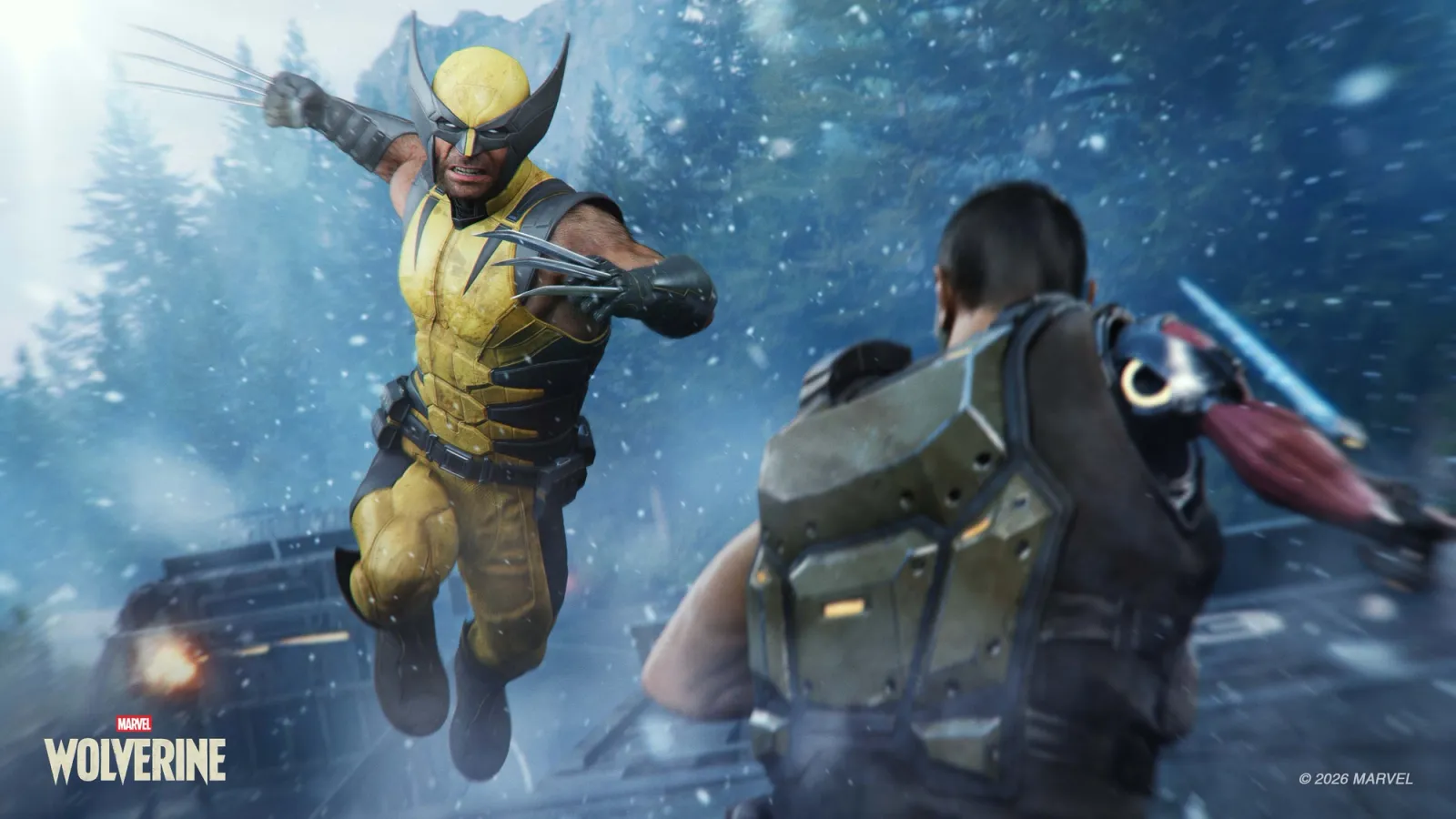
Marvel’s Wolverine is a tightly scripted, bloody, visceral action game that is far more interested in dragging Logan through one brutal encounter after another than giving him a massive playground to explore. It is closer to the older God of War games, with a bit of Sekiro in its combat and the explosive pacing of a particularly violent military shooter.
And honestly? That is where Wolverine is at its best.
Go in expecting another open-world superhero sandbox and you may spend the first few hours wondering where all the freedom has gone. Go in expecting a focused, cinematic action game about a tortured mutant tearing through armies of enemies with metal claws, and the whole thing starts to make sense.
Logan gets his own bloody universe
Marvel’s Wolverine completely sidesteps the usual X-Men timelines and builds its own alternate reality. There is no need to squeeze Logan between films, previous games or decades of continuity. This is Wolverine’s world, and it is not particularly welcoming.
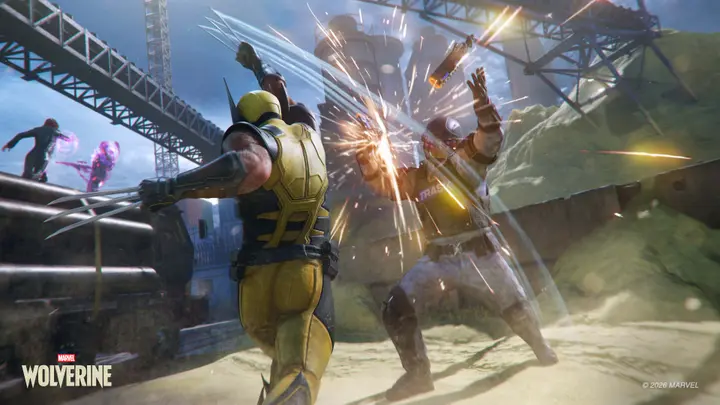
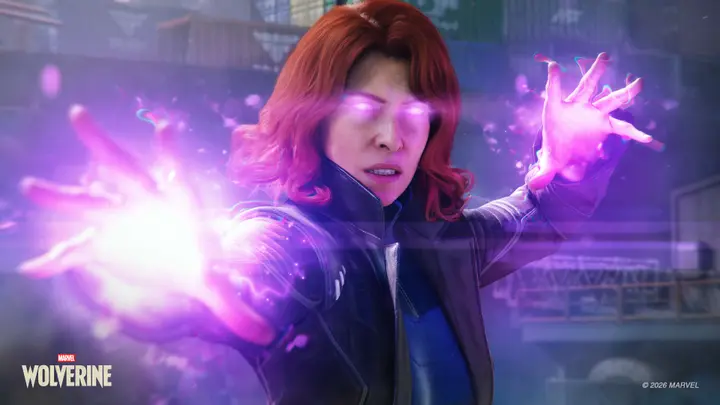
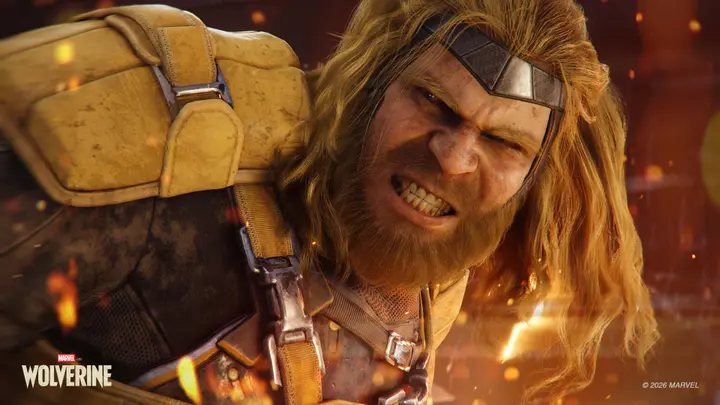
The story follows Team X, a shadowy black-ops group made up of mutant operatives Sabretooth and Mystique. This version of the team is led by Dr Nathaniel Essex, who comic fans will recognise as Mr Sinister. There is no Magneto or Professor X waiting in the wings, and the familiar X-Men structure is nowhere to be seen.
Instead, mutants are being actively hunted by Bolivar Trask for his own infernal experiments.
That freedom does wonders for the story. Wolverine does not feel like it is constantly asking permission from the films or trying to recreate a famous comic-book moment. It takes the characters, throws them into its own alternate history and then lets them get on with being horrible, damaged and extremely entertaining.
Logan himself is the obvious centrepiece. He is presented as an angry hero who hides a tremendous amount of pain behind those expressive eyes. There is a strong sense of the wild man underneath the familiar superhero image, and the game does a good job of showing the tension between Logan’s animalistic instincts and the part of him that is still trying to be a decent man.
He is not a cheerful fellow. This is not a quippy hero who throws jokes at every villain and stops for selfies after a fight. Logan is angry, exhausted and frequently one bad decision away from turning the entire room into a crime scene.
That makes his quieter moments more important. When Wolverine slows down and allows him to reflect, the character is genuinely compelling. The problem is that the game does not always give those moments enough space to breathe.
A linear story with very sharp claws
The campaign is tightly controlled. You are led from one section to another, with cutscenes appearing between the major action sequences. There is little risk of getting lost, and there is not much opportunity to wander off and ignore the story for six hours while collecting backpacks or stopping petty crimes.
That will be a positive or a negative depending on what you want from a Wolverine game.
Personally, I expected a little more freedom. The game does not need to become another 100-hour open-world checklist, but larger levels with more opportunities to explore would have suited Logan. The newer God of War games show how a focused narrative can still offer broad areas, optional paths and meaningful distractions without losing control of the story.
Marvel’s Wolverine is more committed to putting you on rails.
The comparison to the older God of War games is particularly noticeable. Logan moves from one combat arena to another, occasionally breaking up the violence with story scenes, stealth sections and tracking sequences. It creates a strong cinematic rhythm, but it can also feel restrictive when you realise that the game is rarely interested in letting you decide where to go next.
The main story takes roughly 14–16 hours, and I completed the campaign in approximately 16 hours while also tackling most of the optional side challenges. That is a decent length for a focused single-player action game, although the lack of a larger endgame may leave you wanting more once the credits roll.
Post-game activities include replayable combat and nightmare arenas, difficulty multipliers and suit-hunting activities. There is enough here to encourage completionists to keep swinging their claws, but this is ultimately a campaign-first experience.
Combat is fast, fluid and very satisfying
Where the game truly shines is combat.
Wolverine does not fight like Spider-Man, but you can feel Insomniac’s experience with superhero combat underneath the violence. Logan’s movement is quick, responsive and aggressive. He does not wait patiently for enemies to take turns. He ducks, rolls, parries, lunges and tears into opponents with the sort of enthusiasm normally reserved for opening a bag of crisps after midnight.
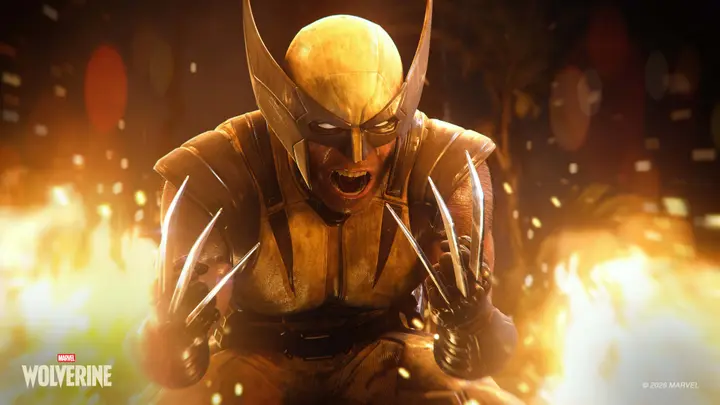
The parry system is the star of the show. It has a definite Sekiro flavour, but the presentation is far more cinematic. Successful parries do not simply stop an attack; they create a moment where Logan immediately turns the enemy’s aggression against them. You are rewarded with free hits, brutal animations and the lovely feeling that you have just made a much stronger opponent regret having hands.
The lunge mechanic is another highlight. Logan can close the distance between himself and an enemy almost instantly, and it becomes one of the best tools for turning a fight around. Bosses that initially seem to have the advantage can suddenly find Wolverine attached to their face, claws out and patience completely gone.
Logan is also surprisingly short compared with several of the villains and enemies he faces. Everyone seems to tower over him, which gives his movement even more importance. He may not have the height, but he makes up for it with speed, ferocity and an alarming willingness to launch himself across a room.
His healing factor is handled in an interesting way. Logan can take a tremendous amount of punishment, but his health can also disappear quickly. The difference is that he can recover health by fighting aggressively and landing certain attacks. The game encourages you to stay on the offensive rather than hiding behind cover and waiting for a regeneration timer.
There is also a quick-heal mechanic that gives Logan one chance to recover after being knocked down. It is a slightly strange choice because death still sends you back to a checkpoint. If Logan can just keep getting back up, why not lean further into the character’s lore and allow him to revive more often?
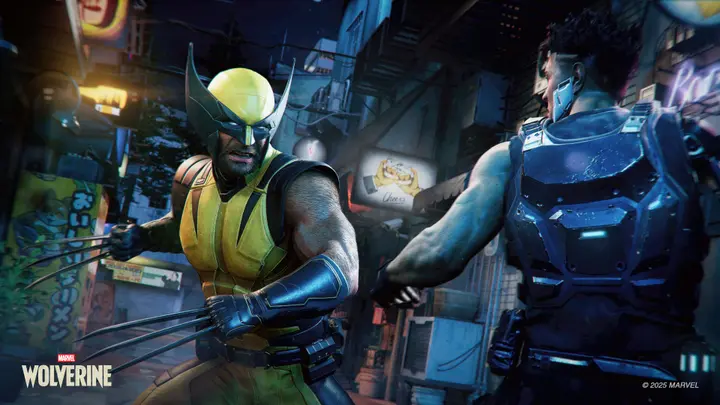
Still, the system works well enough in practice. His healing factor feels like part of the combat rather than a passive ability that exists merely because Wolverine is supposed to regenerate.
Then there is the rage meter. Once charged, it sends Logan into a killing frenzy, allowing him to tear through enemies with even more violence than usual. There is no elegant super move here. There is only Logan having had enough.
The problem is repetition
Unfortunately, the combat begins to unravel slightly when the game keeps returning to the same enemy combinations.
You will regularly face cyborg enemies equipped with shields, swords and guns. This creates a reliable combat loop: parry the attack, deal with the shield, close the distance, kick someone across the room and then perform a suitably unpleasant finisher.
At first, it feels great.
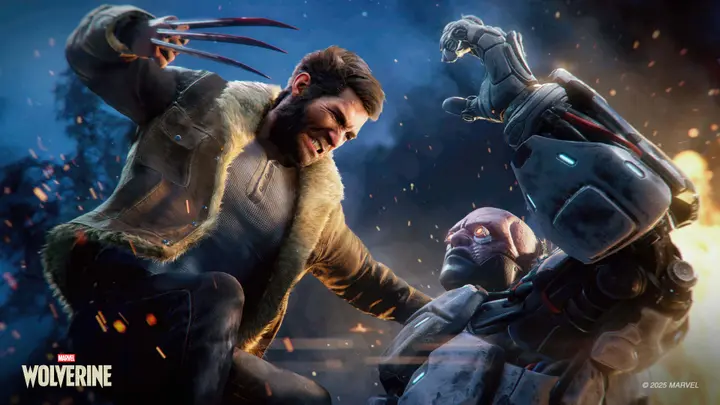
After several hours, it begins to feel like the game is padding itself out with the same group of mechanical lads wearing different lighting.
The combat remains fun because the underlying systems are strong. The problem is that the game does not always give those systems enough variety to remain exciting for the entire campaign. More enemy types, more unusual combinations and more situations that forced you to rethink your approach would have helped.
The boss fights are far more successful. They feel like proper confrontations rather than extended waves of disposable enemies. Logan’s movement, parries and lunges all become more meaningful when you are facing something powerful enough to punish a mistake.
These encounters are peak entertainment. They have spectacle, weight and enough mechanical variety to make Wolverine feel like the unstoppable monster he is supposed to be.
The quieter moments do not always land
The game tries to balance its violence with quieter storytelling scenes and stealth sections. Logan uses his heightened senses to track enemies, follow trails and move through areas without immediately turning everyone into mince.
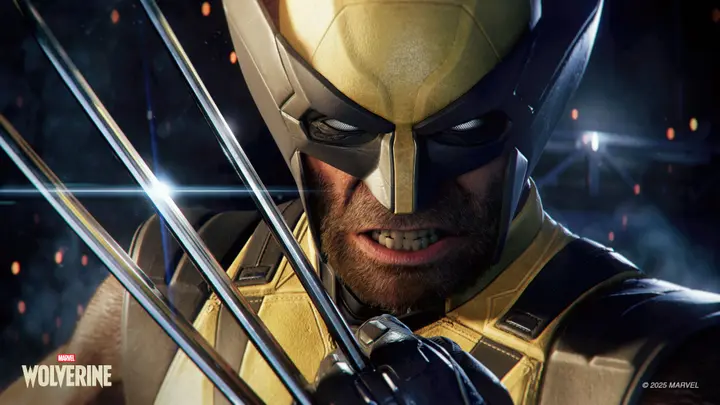
There is one design choice that has already become something of a meme: the bright blue, fart-gas-like trails that Logan follows while tracking. It is not exactly the most dignified presentation of Wolverine’s animal instincts, but it does at least make the tracking mechanics easy to understand.
The bigger issue is pacing.
After you have just carved through a room full of enemies, the game sometimes expects you to immediately settle into a quiet emotional scene. The emotional content itself can be effective, but the transition is not always smooth. It feels like the game has slammed on the brakes after getting your blood pumping.
The newer God of War games balance this contrast more naturally. Their emotional scenes and action sequences feel like they build towards each other. In Wolverine, the tonal shift can be so sudden that you are still mentally processing the last enemy you impaled when the game asks you to focus on a serious conversation.
That said, the emotional highs that do work are genuinely effective. Logan is a character built around pain, anger and regret, and the game understands that. It just does not always give those emotions enough breathing room.
A gorgeous, gloriously violent game
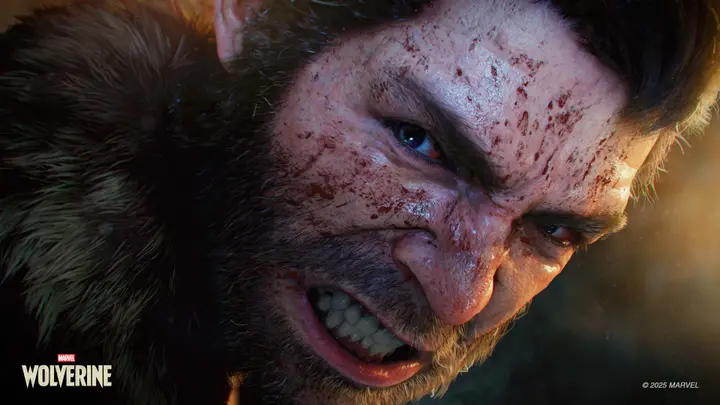
Graphically, Marvel’s Wolverine looks considerably better than the trailers suggested.
The gore is excessive in exactly the way it should be. Damaged Logan can reveal metal ribs, limbs come off with alarming enthusiasm and enemies are treated less like people and more like bags of meat that have made several poor career choices.
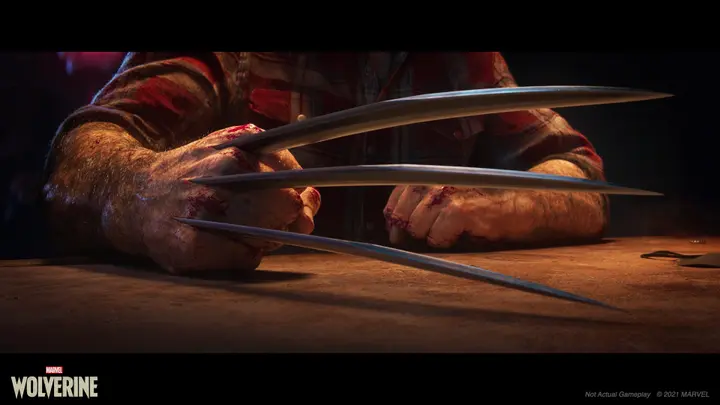
There is a satisfying weight and friction behind each hit. Wolverine’s claws do not feel like harmless glowing swords. They slice, catch and dig into whatever unfortunate enemy happens to be standing in front of him.
The visual fidelity is excellent on the standard PlayStation 5. I played in Performance Mode and the game maintained a solid 60 frames per second, with only minor and negligible drops during the heaviest multi-enemy explosion sequences.
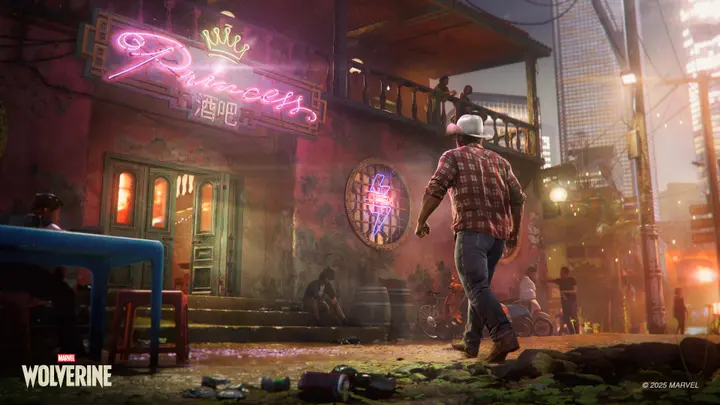
The characters look good, the facial animation sells Logan’s exhaustion and the environments have enough detail to make the alternate universe feel believable. The game also sounds excellent. The combat impacts have real force behind them, and spatial audio adds an impressive amount of positional detail when played through compatible headphones.
The accessibility options are also worth acknowledging. I tested high-contrast display modes, spatial audio focus, motion blur controls and reduced-button-mashing toggles for quick-time sequences. These options make the game more comfortable to play without undermining the intended experience.
Suit up, bub
One of the best elements carried over from Spider-Man is the suit collection.
There are more than 30 suits to unlock and collect, and they cover a broad selection of Wolverine eras and interpretations. You can equip the Age of Apocalypse suit, the classic 1980s brown suit, the cel-shaded X-Men ’97 design and a cyberpunk-looking Weapon X outfit.
Fans of the Deadpool & Wolverine film or the Marvel Tokon designs are not being ignored either. Several of those looks are included, giving players plenty of opportunity to turn Logan into their favourite version of the character.
The suits are cosmetic only, so changing outfits does not alter Logan’s stats or combat abilities. That is the right choice. You can dress him however you want without being punished for selecting the suit you actually like.
It also gives the post-game something useful to do. Hunting down suits and completing challenges is not revolutionary, but it is a satisfying excuse to revisit the combat arenas and show off a different version of Wolverine while doing it.
Marvel’s Wolverine is not the huge open-world game many people may expect from Insomniac. It is more focused, more linear and far more interested in making you feel every slash, parry and explosion than allowing you to roam freely.
That focus works more often than it does not.
The combat is fast, fluid and gloriously violent. Boss fights are excellent. Logan is a compelling lead, the alternate universe gives the story room to breathe and the visual presentation is considerably stronger than the trailers suggested. The suit collection is a lovely bonus, especially for fans who have a particular Wolverine era they want to wear into battle.
The repetition is the game’s biggest weakness. The same cyborg enemies appear too frequently, and the linear structure occasionally feels less like a deliberate cinematic choice and more like the game refusing to let you wander off. The transitions between brutal action and quiet emotion can also be clumsy.

But there is a genuinely bloody good game here, with emphasis on bloody.
The $69.99 / €79.99 Standard Edition gives you a focused single-player campaign lasting around 14–16 hours, plus challenge arenas, difficulty modifiers and suit hunting after the credits. There are no microtransactions and no forced day-one monetisation, which feels refreshingly normal in a full-price game.
Do not buy Marvel’s Wolverine expecting another open-world Spider-Man. Buy it if you want a cinematic, brutal action game about a tortured mutant punching through his problems with adamantium claws.
It is not perfect, but when Logan is in motion, the game is an absolute freight train — bloody, angry and very difficult to stop.
- Excellent parry and lunge combat
- Strong Logan performance and alternate-universe story
- Gorgeous gore and visual presentation
- Solid 60fps PS5 performance with spatial audio
- More than 30 cosmetic suits and no microtransactions
- Repetitive cyborg enemy encounters
- Strict linearity limits exploration
- Tracking trails are an awkward design choice
- Uneven transitions between action and emotion
- Limited post-game longevity