Marvel's Wolverine and Ghost of Yōtei lead PS5's new AI upscaling
Quick Spectral Super Resolution, the first technology to come out of Sony's Project Amethyst collaboration with AMD, has been patched into both games today and promises PSSR-style image quality on the standard console.
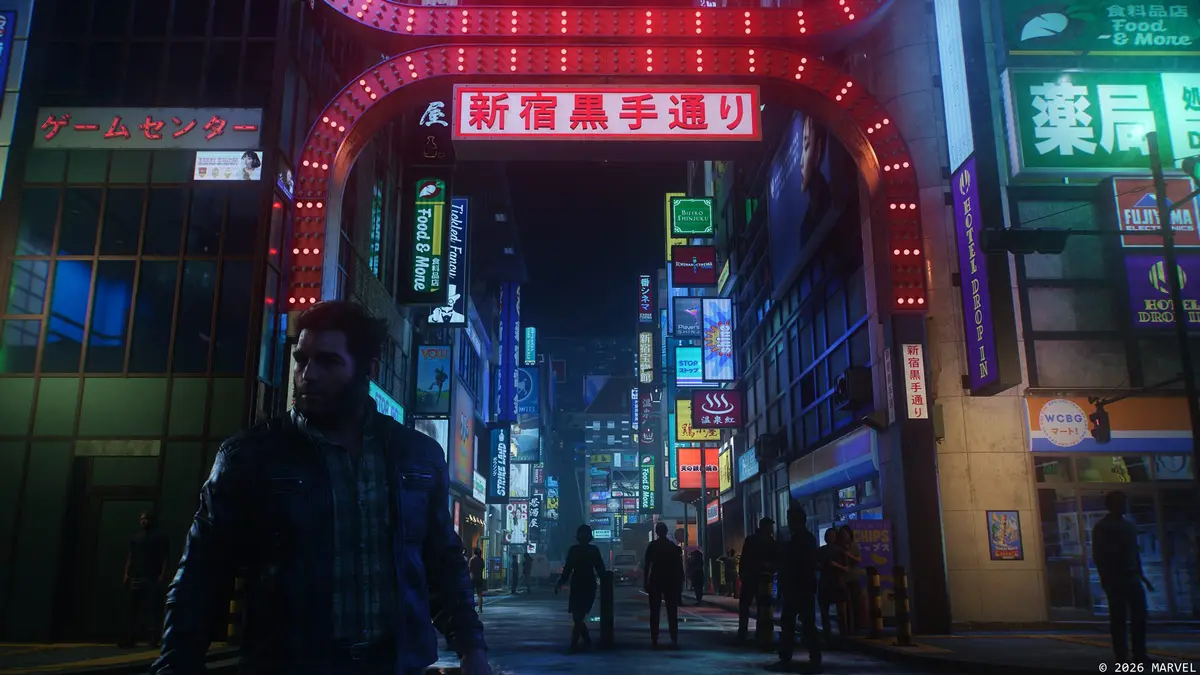
Sony has found a way to bring the AI upscaling that sells the PS5 Pro to the console most people actually own. In a PlayStation Blog post published on 1 October, Daniel Craig, a principal engineer in Sony Interactive Entertainment's graphics R&D group, announced Quick Spectral Super Resolution, or QSSR, and called it a new performance tier of AI upscaling for the standard PS5.
What QSSR actually does
QSSR is a smaller sibling of PlayStation Spectral Super Resolution, the machine-learning upscaler Sony introduced alongside the PS5 Pro. PSSR rebuilds game images pixel by pixel and, until now, its computational cost kept it off the base console. QSSR closes that gap with two changes: a streamlined neural network architecture and a hand-tuned implementation built to make the most of the standard PS5's hardware. Sony is explicit that PSSR remains the gold standard on the Pro, and that QSSR's gains are in image detail and image stability rather than raw frame rate.
Two games were patched today
Marvel's Wolverine and Ghost of Yōtei are the first titles to use the library, and both received updates today that add QSSR as an extra option in the graphics menu. Insomniac Games' head of technology, Mike Fitzgerald, said the technique adds pixel-level clarity and stability to the game's environments, singling out the streets of Madripoor and the alleyways of Shinjuku. Sucker Punch's lead rendering engineer, Jasmin Patry, said QSSR resolves fine detail in characters and environments with a level of temporal stability that had not been possible on the PS5 until now.
Project Amethyst, and what comes next
QSSR began life in Project Amethyst, the AI graphics collaboration between Sony and AMD, which makes it the first piece of that project to reach players in a shipping game. Sony says the library will be offered broadly to PlayStation developers, so the two launch titles are a demonstration rather than a limit: the pitch is that any studio can add the toggle, and that the improvement costs a patch rather than a console.
Our opinion
For four years PlayStation has treated image quality as something you buy — a Pro console, a new television, a mid-generation upgrade — and QSSR is the more interesting admission that a large part of the gap was software all along. Shrinking a neural network and tuning it for older silicon is unglamorous work, and it will do more for the consoles already sitting in living rooms than any amount of extra throughput. The catch is in the phrase “additional graphics option”. QSSR is a menu toggle rather than a default, so a game only benefits if its studio does the work to expose it, and there is no sign yet that the long tail of titles leaning on older reconstruction techniques will bother. The other name worth watching is AMD. The same hand-tuned, cheaper-to-run network that rescues a 2019 console is a plausible answer to the identical problem on a desktop graphics card, and Project Amethyst runs both ways.