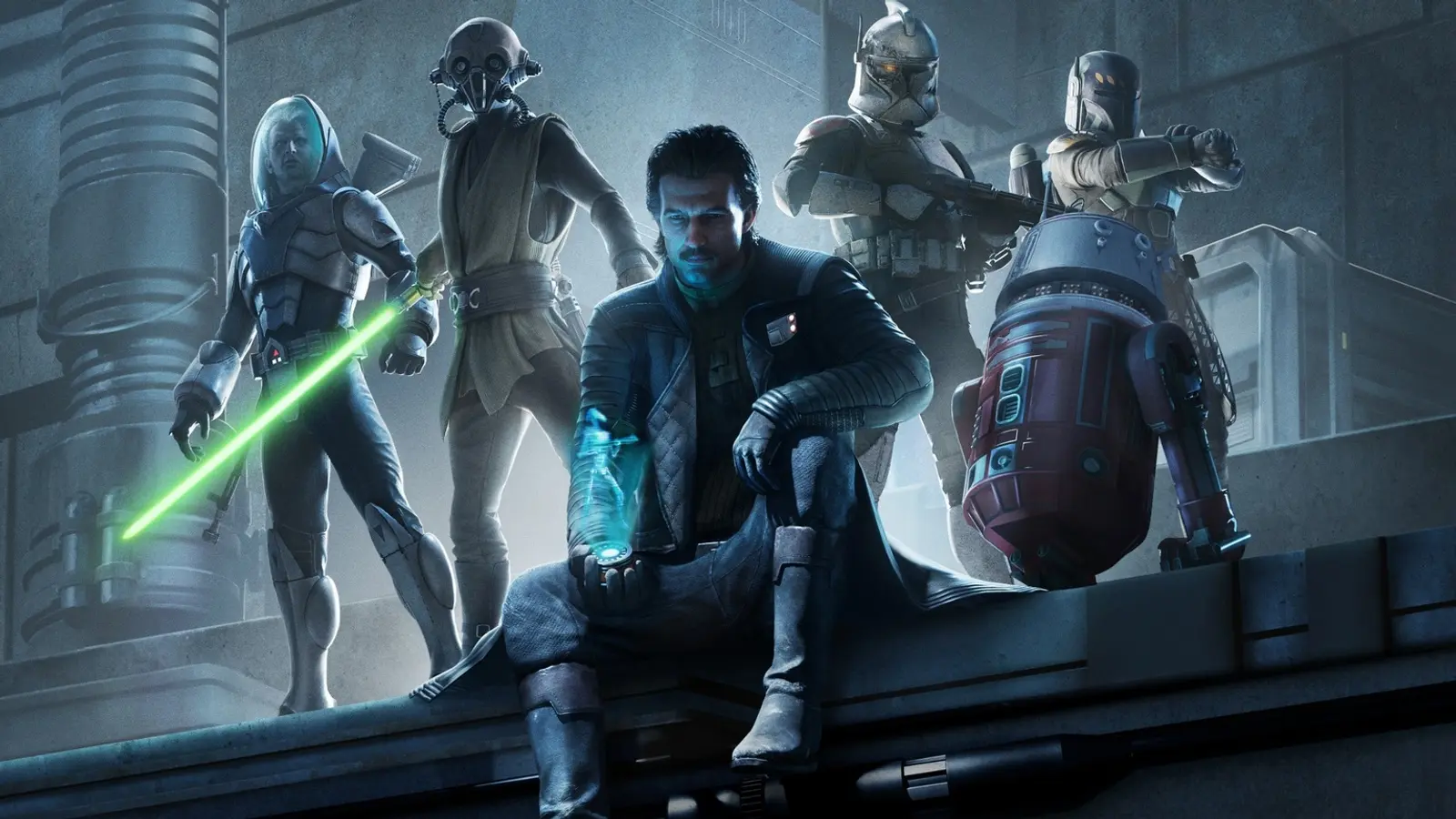
The first hour of Star Wars Zero Company is a game of spot the influence. The movement, the cover system, the turn-based combat and the constant need to position your squad before everything inevitably goes horribly wrong all feel instantly familiar. Then you learn that several of the people behind it worked on XCOM and Marvel's Midnight Suns, and everything makes sense.
XCOM's DNA, in a different uniform
Developer Bit Reactor is packed with former Firaxis developers, and that DNA runs through Zero Company. Calling it Star Wars XCOM would still do it a massive disservice, because once you get past the obvious similarities it starts doing its own thing. More importantly, this is a strategy game where combat matters but isn't the whole game.
You play Hawks, a former Republic officer who now runs a slightly dysfunctional mercenary company during the Clone Wars. Things are not going swimmingly for Hawks and the gang when Republic Intelligence hands them a job investigating a mysterious organisation called The Coil. Without giving away too much, things escalate.
A story I actually cared about
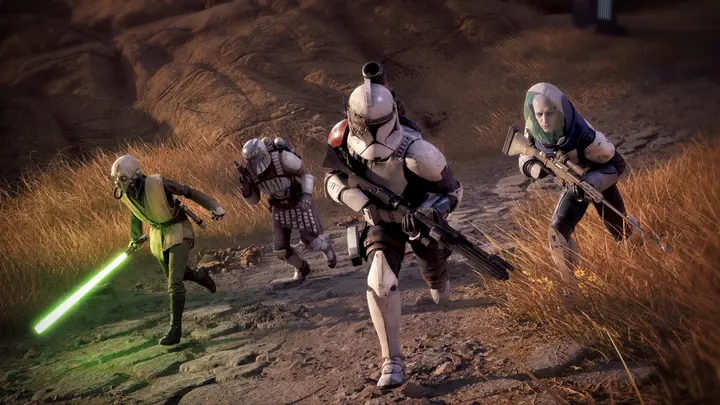
What surprised me most was how much I cared about the story. With games like XCOM, I am there for the strategy: the plot is background noise while I obsess over which soldier gets the shiny new rifle. Zero Company reverses that relationship a little. I actually wanted to know what happened next.
The characters have personalities, relationships and motivations, and your headquarters, The Den, feels less like a menu you visit between missions and more like a place occupied by the people you fight alongside. You can wander around, speak to your crew and slowly get to know them. Some characters have their own missions and stories, and building relationships can even affect how useful they are when people start firing blasters at you. There are moments when it feels closer to Mass Effect or Midnight Suns than XCOM, and I mean that as a compliment.
It helps that the game doesn't rely on Jedi waving lightsabers around every five minutes to remind you it's Star Wars. There are Jedi and plenty of familiar ingredients, but much of the story concentrates on soldiers, mercenaries, droids, spies and the galaxy's dirtier side. Refreshing, too, in a period as well-trodden as the Clone Wars: the game squeezes its own story into that era without feeling like someone desperately searched the timeline for five unused minutes between two episodes of the animated series.
Three actions, far more options
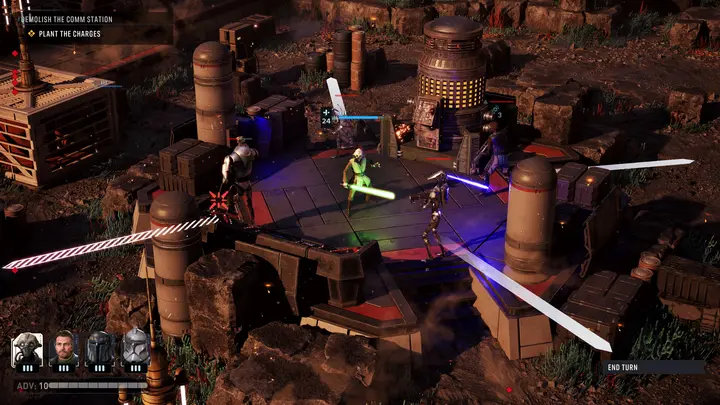
Anyone who has played modern XCOM will understand the basics quickly. You take a squad of up to four onto a map, find cover, get into good positions and attempt to turn the opposition into smoking armour before they return the favour.
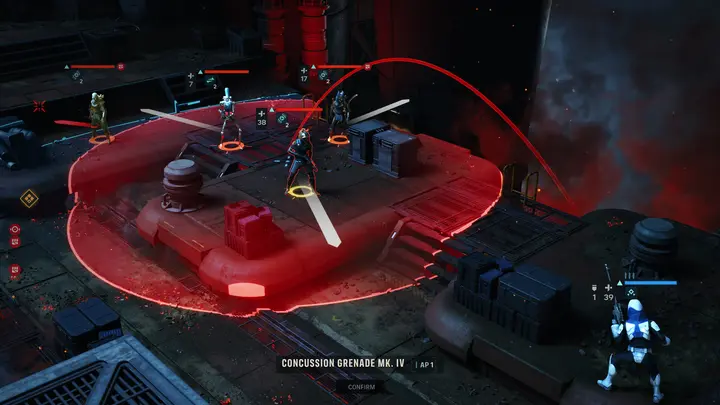
The major difference is the three-action-point system. Instead of rigidly dividing a turn into movement and an attack, you get three points to spend. Moving costs points, weapons cost different amounts and abilities have their own requirements. Some skills also use Advantage, a resource you build in combat and spend on more powerful moves. It doesn't sound revolutionary written down, but it makes combat considerably more flexible: you can attack, reposition and then do something else, or move twice because you suddenly realised the person you confidently placed midfield is about to become a very expensive target dummy.
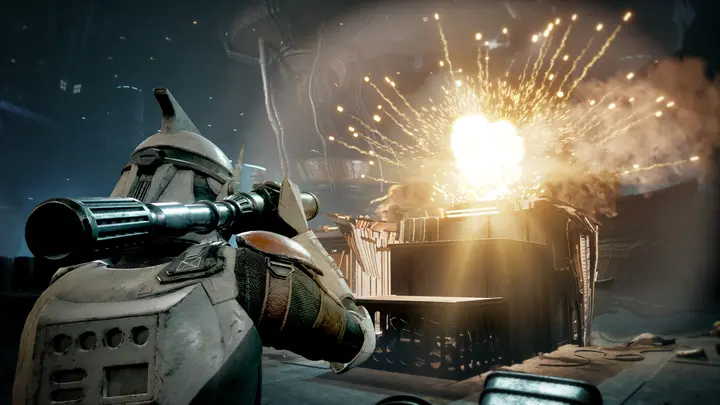
You can also swap between characters freely before committing actions, which encourages you to think about the whole turn rather than playing each soldier individually. Specialisations and abilities work together: one operative marks a target, another weakens it, a third finishes the job. Certain abilities trigger additional attacks or let teammates pile damage onto the same enemy, and Force powers can throw people around the battlefield — including into areas your other characters are already watching. When everything works, it is glorious.
Which is the point. There is nothing quite like spending several minutes staring at the battlefield, moving everyone into position and then watching an entire group of enemies disappear because the ridiculous plan in your head somehow worked. That is what I want from a tactics game.
Maps that make you move
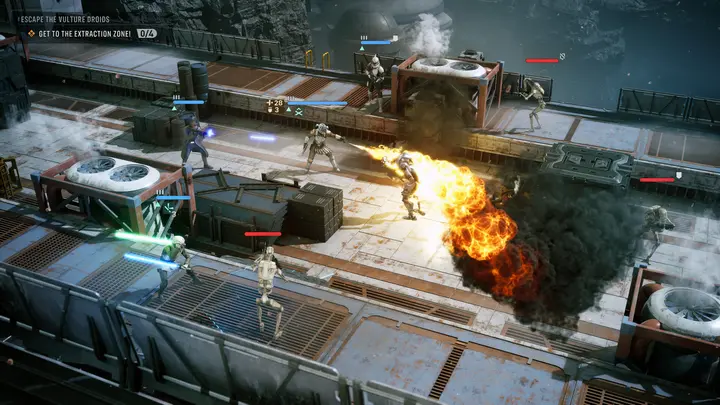
The maps help considerably. Missions aren't always about killing every enemy who made the terrible life choice of standing opposite Zero Company: you might need to rescue someone, retrieve something, escape an area, or fight while the battlefield itself becomes increasingly dangerous. These objectives stop the game becoming an endless series of rooms filled with disposable droids, and some missions actively force you to move rather than finding one excellent bit of cover and setting up a permanent residence there.
The Den is the real game
Then you return to The Den, and this is where the part of Zero Company I enjoy most begins. You are managing a company, not simply a squad. Credits, Intel and other resources have to be spent carefully: you can improve facilities, buy equipment, research permanent upgrades and run operations across the galaxy. There is an entire strategic layer ticking along behind the shooting, with different regions, operations and decisions demanding your attention. Give me a screen full of upgrades, limited resources and several mutually inconvenient decisions and I will happily stare at it for half an hour.
You cannot unlock everything immediately either, which forces choices about what matters to your version of the company. Add character progression, equipment, weapon modifications, abilities and eventually multiclassing, and there is plenty to tinker with. You can hire custom mercenaries alongside the story characters, and Hawks can be customised with options for species, appearance, clothing and combat role.
Depth the interface doesn't always explain
There are plenty of tools here. Unfortunately, I didn't find the process of using some of them particularly intuitive. There were several occasions where I knew exactly what I wanted to change but spent far too long working out where the game had hidden the option. The console interface sometimes feels like a PC interface that reluctantly agreed to work with a controller after a lengthy meeting with HR. It gets easier once you understand where everything lives, but Zero Company throws a lot of systems at you and the interface isn't always as clever as the game underneath it.
Fortunately, the game explains the important bits well. Tutorials introduce systems gradually and tooltips are there when you have inevitably forgotten what an ability does. There are four difficulty settings and permadeath is optional, so you decide exactly how much emotional damage your strategy game inflicts. There is even a hardcore-style option for people who look at save files with disgust and believe every terrible tactical decision should follow them to the grave.
The accessibility options deserve mention too. You can remap most controls, change text sizes, adjust subtitles, use colourblind filters and tweak things like camera behaviour. There is also an option to warn you before ending a turn while you still have action points available. That might sound minor, but in a game where one forgotten action point can result in someone being blasted into another postcode, I appreciate it.
Looks fantastic, until it doesn't
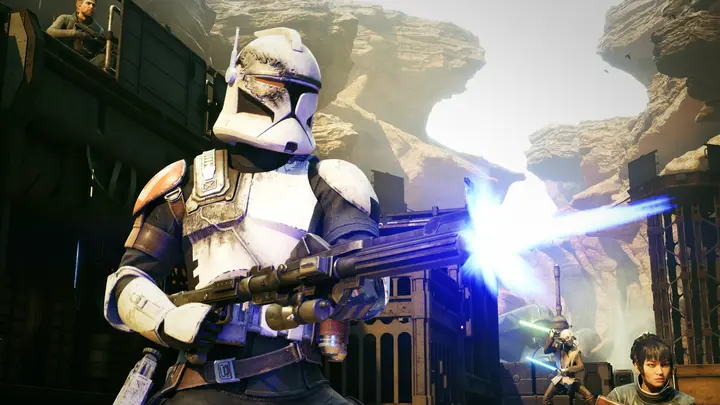
Visually, Zero Company is an odd one. At its best it looks fantastic: the environments are detailed, the lighting is excellent, and the mix of industrial corridors, alien worlds and wonderfully grubby Star Wars technology gives everything the right feel. Blaster fire, smoke and explosions look especially good in combat.
The game also occasionally drops the overhead strategy camera and lets you walk through environments in third person. These sections aren't particularly complex, but they make the world feel more tangible, and The Den benefits most because you actually inhabit your base rather than operating it entirely through menus. It gives a tactics game a strange sense of scale the genre often lacks.
Unfortunately, on the PS5 version I played, the visual quality doesn't always survive close inspection. Story scenes are where I noticed most of the problems: character animations can look sketchy, there are visual artefacts, and occasionally something just looks slightly wrong. I encountered enough graphical weirdness that it became noticeable rather than something I could dismiss as one random glitch. That is particularly unfortunate because the game clearly wants to be cinematic. When the camera zooms right into someone's face, that face had better behave itself.
It doesn't ruin the experience, and the tactical portions generally look good — there were no crashes at all — but there is a layer of technical polish missing from the PS5 version. Considering how strong the art direction is, these problems stand out even more. The interface can also become busy: there is a lot of information to communicate in a tactical game, and once abilities, status effects, cover, movement ranges and enemies start filling the screen, it occasionally has the visual elegance of someone's desk five minutes before a deadline. You learn to read it, but it takes time.
Audio is where it never slips
Audio fares much better. Blasters sound like blasters, lightsabers sound like lightsabers, and the general soundscape immediately puts you in Star Wars territory. Gordy Haab's orchestral score understands what it needs to do without spending the entire game desperately reminding you of John Williams.
More importantly, the voice performances sell the crew. There is a lot of dialogue in The Den, which could have turned into something I rapidly clicked through; instead I regularly stopped to hear what everyone had to say. The cast gives the characters enough personality that spending time with them becomes part of the appeal rather than administrative work between missions, and that feeds back into combat. Characters aren't simply collections of statistics — you have spoken to them, heard them argue and watched relationships develop. So when permadeath is switched on and someone you have spent hours developing is suddenly in serious danger, things get a little stressful.
No battle pass, no nonsense
Zero Company is also refreshingly straightforward about monetisation. There is no battle pass lurking around a corner, no shop trying to sell 500 Galactic Fun Bucks and no microtransaction system welded onto the progression. There is a Deluxe Edition with additional cosmetic content, but the game itself is a complete single-player experience. What a fascinating modern concept.
There is no New Game+ at launch, although some customisation rewards carry into later playthroughs. That is slightly disappointing, because the different classes, character combinations and strategic choices give the game plenty of replay potential. Still, the campaign is substantial: I finished my playthrough at around 35 hours with a balanced amount of optional content completed, and I never found myself wondering where the rest of the game had gone. Different difficulties, optional permadeath, alternative builds and the ability to create your own operators give anyone who really enjoys the systems reasons to return.
Yes, Star Wars Zero Company owes an enormous debt to XCOM. You don't need to be a strategy-game detective to figure that out, and the developers aren't hiding the family resemblance. But somewhere between managing The Den, improving characters, building relationships, choosing operations and occasionally spending an embarrassing amount of time deciding where one person should stand, I stopped thinking about XCOM. I was thinking about Zero Company. That might be the biggest compliment I can give it.
For someone who enjoys strategy, management and tinkering with a team more than mindlessly running into another firefight, Zero Company hits a very specific sweet spot. The combat is excellent, but it exists as part of a much larger strategy game rather than being the only thing holding everything together. The PS5 version needs more polish, the menus could be more intuitive and some animations look like they escaped quality control while nobody was watching — none of that stopped me wanting to play another mission. I just wish someone would use the Force on those PS5 cutscenes.
- Three-action-point combat rewards planning over reflex
- The Den turns a base screen into a place you actually inhabit
- An original Clone Wars story with a crew worth caring about
- No battle pass, no microtransactions, and a full single-player campaign
- Strong difficulty, permadeath and accessibility options
- Story-scene visuals and animation look unpolished on PS5
- The tactical interface gets busy and takes time to read
- Customisation menus bury options you know exist
- Third-person exploration sections are shallow
- No New Game+ at launch