The Finals begins a new chapter on 20 October
Embark Studios has confirmed that the next season of The Finals lands on 20 October, and says this year was planned around one bigger goal instead of three separate seasons.
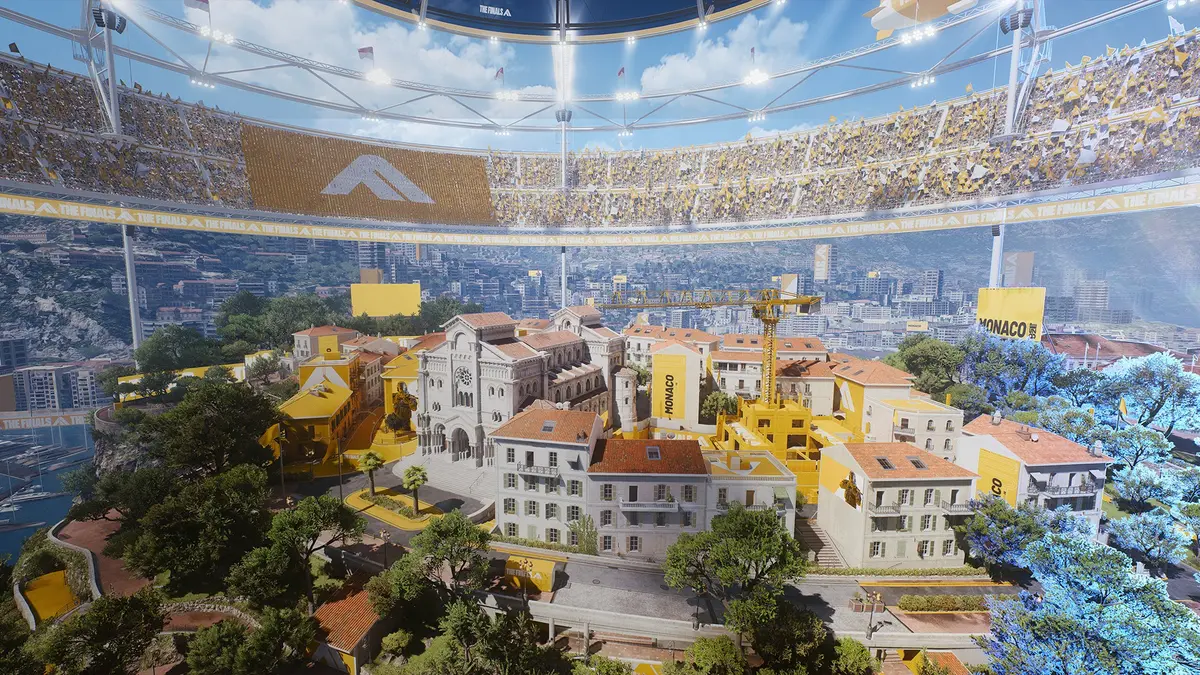
The next season of The Finals arrives on 20 October, and Embark Studios has used the announcement to explain why this year has felt different. In a post titled A New Chapter on the game's own site on 18 September, executive producer Christian Aarsrud said the studio changed the way it plans its year: instead of treating 2026 as three separate season-sized efforts, it set one larger goal across all twelve months.
One goal for the year instead of three seasons
That longer runway, Embark argues, bought time for work that does not fit inside a three-month cycle. The studio says the bulk of its energy went into deepening what is already in the game rather than bolting on more seasonal content, and that much of that work lands when the October season begins. An updated roadmap is also promised.
Sponsors get promoted out of the progress bar
Sponsors are being turned into a core part of being a Contestant rather than a passive progression system. The post says the relationship should carry identity, personality and purpose, which in practice means you are competing on behalf of somebody rather than filling a meter. Embark is also reworking how Contestants, teams and Arenas are introduced, and how the game show itself looks, feels and unfolds while a match is running.
Destruction finally gets a middle ground
The substantial technical change is to destruction, which Embark calls the biggest update it has made to the system since launch. Until now a piece of the environment was mostly either intact or destroyed. The new system lets parts of a structure stay partly attached as it comes apart, so floors sag, walls lean and buildings fail in far more varied ways. A damaged floor can sag into the one below, opening a route between storeys, and the debris left behind by a large collapse becomes new surfaces to move and fight across. Knock-on effects are stronger too, so one failure can trigger another and set off chain reactions through a building, and smoke now reacts to forces inside the Arena.
The oldest Arenas are reworked first
Existing maps are being rebuilt with lessons from almost three years of watching people play them, plus technical capabilities that did not exist when the first Arenas were built. Embark says lighting and materials have been reworked for clarity, level design has been changed extensively, and each Arena is being given a stronger identity with its own sponsor, colours and character. Balance and performance have had, in the studio's words, serious attention. A new Playstyle, a new Mode and a full interface and HUD rework are being held back for the weeks before launch.
Our opinion
There is an admission buried in this post that a live-service studio rarely makes in public: the season-to-season cadence was the problem. Three months is not long enough to rebuild destruction, and Embark has now said out loud that it needed longer, which is a more useful thing to hear than a promise of more content. The risk sits on the other side of the same decision. A year spent deepening the existing game means a season whose headline is that the floors sag believably, and the studio is openly holding back a mode, a playstyle and a UI rework for the marketing weeks in between. That is fine if the sagging floors and the chain-reaction collapses are genuinely transformative, because destruction has always been the thing the game sells and the thing it has most often failed to deliver at scale. It is much less fine if the community reads 20 October as a patch with a new sponsor logo on it. The Finals turns three in December, which means the audience that stuck around is patient but not infinitely so, and the studio has now spent its credibility on physics rather than novelty.