Stranger Than Heaven's Toei tribute lands 15 January 2027
SEGA's Stranger Than Heaven has a Toei collaboration, a tribute trailer and a confirmed 15 January 2027 release on PlayStation, Xbox and PC.
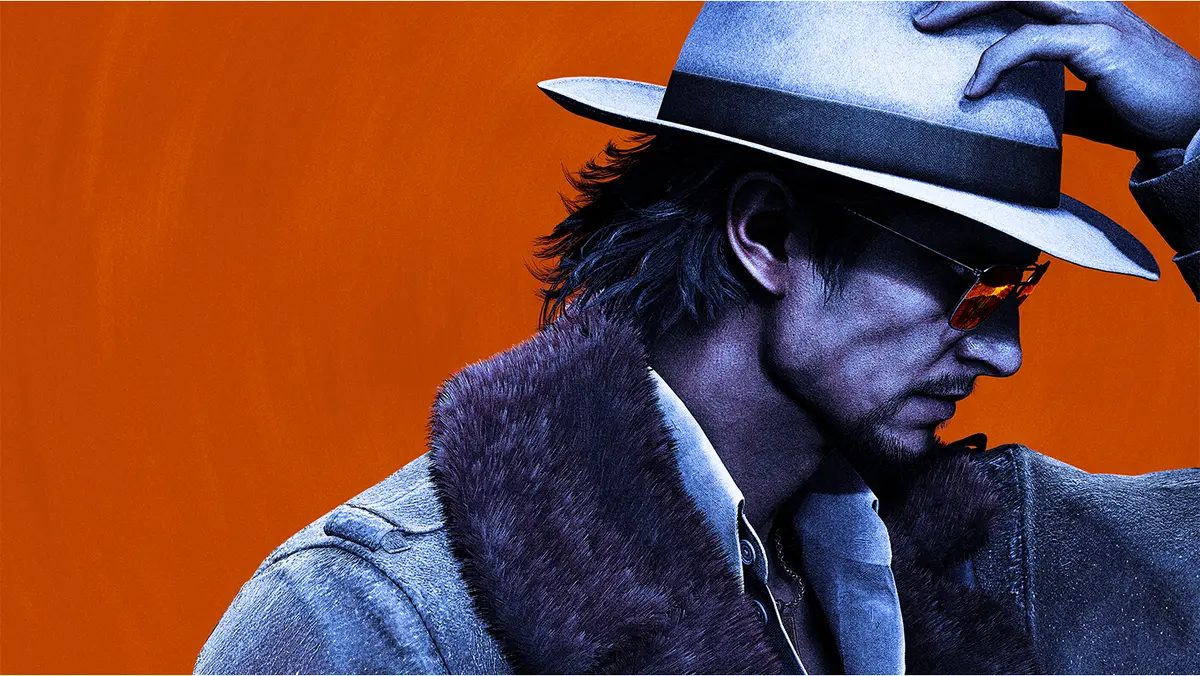
SEGA's Stranger Than Heaven has been one of the loudest games on the Tokyo Game Show floor this week, and the announcement that will travel furthest is not a gameplay demo. On 17 September the game's own channel published a collaboration tribute trailer for Toei, the studio behind some of the most enduring crime films Japan has produced.
The trailer is a homage rather than a scene from the game. SEGA describes it as a tribute to Toei's Battles Without Honor and Humanity, built from music, stylistic elements and editing inspired by the series — the 1973 yakuza film that Kinji Fukasaku directed as the first of five he made in just two years.
What the collaboration actually is
It is worth being precise about the size of this. SEGA states that the trailer's music and styling are not representative of the game itself, and the collaboration merchandise shown alongside it is sold only in Japan. There is no film tie-in, no crossover story content and no release implication beyond the game that was already on its way, so what Toei and SEGA have announced is a collaboration around the game, presented through a trailer that borrows the visual grammar of the film series.
The source material is worth knowing, because it is not glamorous. Fukasaku's series adapts a 1972 run of magazine non-fiction by Kōichi Iiboshi, which was itself a rewrite of a manuscript by Kōzō Minō, a real yakuza. That is the lineage being invoked here: a crime saga built from a gangster's own account rather than from invented legend.
A fifty-year story across five cities
Stranger Than Heaven is Ryu Ga Gotoku Studio's first new crime saga since it took Yakuza into Like a Dragon territory, and the canvas is much larger. The protagonist is Makoto Daito, born in San Francisco to an American father and a Japanese mother, who loses both of his parents and sails for his mother's homeland. The story runs from 1915 to 1965 across five cities: Kokura in Fukuoka, Kure in Hiroshima, Minami in Osaka, Atami in Shizuoka and Shinjuku in Tokyo.
Two hands of violence and one showman's ear
The combat gives players independent control of Makoto's left and right sides, so he can block with one hand and counter with the other, follow a jab with a charged blow, or pin a staggering enemy to the ground. Knives, hammers and katanas all feature. Between the fights he becomes a producer: gathering sounds from the street, building them into songs, then casting, staging and lighting his own shows as he tours the country.
Date, platforms and price
Stranger Than Heaven arrives on 15 January 2027. PlayStation's store listing times it at 05:00 UTC, which is why Steam's page displays 14 January in most regions. It is coming to PC through Steam, to PlayStation 5 with a PS5 Pro Enhanced label, and to Xbox Series X|S, Xbox on PC and Xbox Cloud Gaming, where SEGA lists it for Game Pass as well. Pre-orders are open at $69.99, £64.99, €69.99 and ¥8,990, with a pre-purchase bonus weapon called Dosu: Kagekiri. A Deluxe Edition adds an outfit for Makoto, four weapons, four performers, three stage-production items, a poster, an in-game record player and a camera.
One million wishlists, four months early
Demand is not the problem. In a community post on 2 September, SEGA said the game had passed one million wishlists across all platforms, making it Ryu Ga Gotoku Studio's most-wishlisted title before release, with more than four months still to go.
Our opinion
Borrowing heritage is the cheapest trick in marketing, and SEGA has just paid for the expensive version of it. A tribute to Battles Without Honor and Humanity is not merchandising; it is a claim about which tradition this game belongs to. Ryu Ga Gotoku Studio has never needed that kind of scaffolding before. Yakuza built its own mythology out of present-tense men in a city you could walk around, and the discipline of that single setting is what made the melodrama land. A saga spanning 1915 to 1965 risks the opposite failure: five cities and five decades is a great deal of architecture, and intimacy is the first thing a timeline eats. The encouraging detail is that the collaboration is framed honestly — as a tribute, with the music and styling explicitly not the game — which suggests nobody is pretending a montage is a feature. Judge the combat instead, because independent control of two arms is a real design idea rather than a borrowed mood. Fukasaku made his five films in two years on the strength of one thought about violence, and one thought is also what this game needs. Everything else is taste.