Steam beta tests Pyrowave, a bandwidth-hungry codec
Valve has added an experimental Remote Play codec called Pyrowave to the Steam client beta, and it asks for five to ten times the bandwidth of the codecs it sits beside.
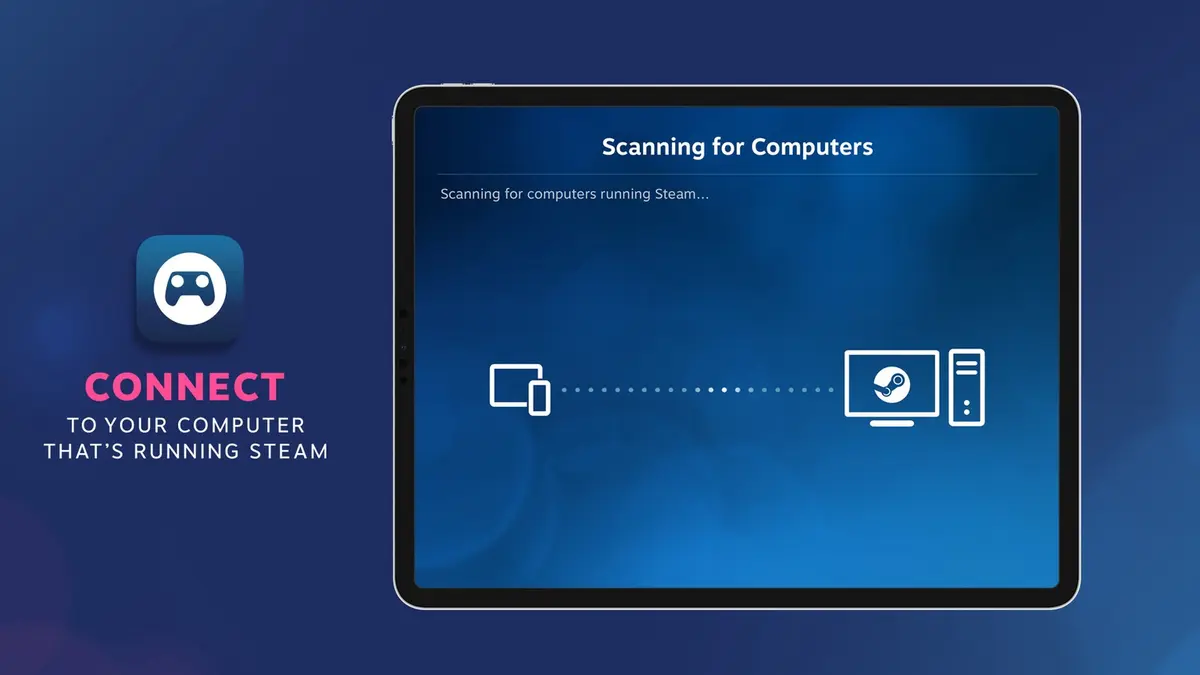
Valve is testing a streaming codec that buys smoothness with bandwidth. The newest Steam client beta adds Pyrowave, an experimental Steam Remote Play codec that Valve says needs five to ten times the bandwidth of the codecs it joins.
What is actually in the beta
The client notes themselves run to a single line: an experimental video codec, Pyrowave, which allows high bandwidth, low latency video streaming. The detail sits in Valve's Remote Play discussion group, where the codec is available now in the Steam beta on Windows and macOS, on Linux only with the experimental SteamRT3 client enabled in System Settings, and soon in the Steam Link app for mobile devices.
Pyrowave is not switched on by default. Players who want to try it enable it in Steam Remote Play's advanced client settings, and they will want a wired connection: Valve recommends both machines sitting on the router with at least gigabit ethernet. When automatic bitrate is off, the stream can be pinned anywhere between 100 and 500 Mbit/s.
The codec encodes and decodes frames on the GPU, which is how Valve gets what it calls extremely low end to end latency on a good network. It also carries colour with more precision: HDR turns itself on when both the host and the client support it, while YUV 4:4:4 is off by default because it costs extra bandwidth and processing time, and is intended for desktop streaming or reading text on a 4K display. Valve credits the codec to Hans-Kristian Arntzen, named in the announcement as its author.
Why latency is the awkward part
Every streamed frame travels the same path: encode on the host, cross the network, decode on the client, then reach the screen. Those four steps are the total latency a player feels, and Remote Play can draw them as a performance graph while a session runs. The usual compression trade-off attacks the network leg by shrinking frames; Pyrowave goes the other way, spending bitrate that a wired network has spare so that the encode and decode stages can stay short.
That does change how the stream behaves. Steam normally tunes for visual quality with a constant frame size, so a higher frame rate simply demands more bandwidth. With Pyrowave, the quality slider becomes a bandwidth dial, and the ceiling Valve has published is high enough that most home internet connections are irrelevant to it. This is a codec for the local network, and Valve is upfront that a given setup may or may not gain anything from it.
Our opinion
This is the least glamorous kind of Valve announcement and one of the more revealing. A codec that asks for five times the bandwidth will never be the default, so what Valve has actually shipped is a luxury setting for people who already wired their house and bought a decent router. That is a small audience, but it is exactly the audience that complains loudest about Remote Play, and it is cheap for Valve to satisfy.
The mobile line in the notes is the one worth watching. Steam Link on a phone over Wi-Fi is the hardest case for any codec, and if Pyrowave's latency advantage survives that trip it will say more about the design than any desktop benchmark. For now the honest summary is that Steam now has a streaming mode for people who care about milliseconds and own the network to chase them.