Factorio ships an ARM64 build and earns Steam Frame Certified
Wube Software has ported Factorio to ARM64 Linux for Valve's Steam Frame, where the native build runs about 11% faster than the x86 version put through FEX translation.
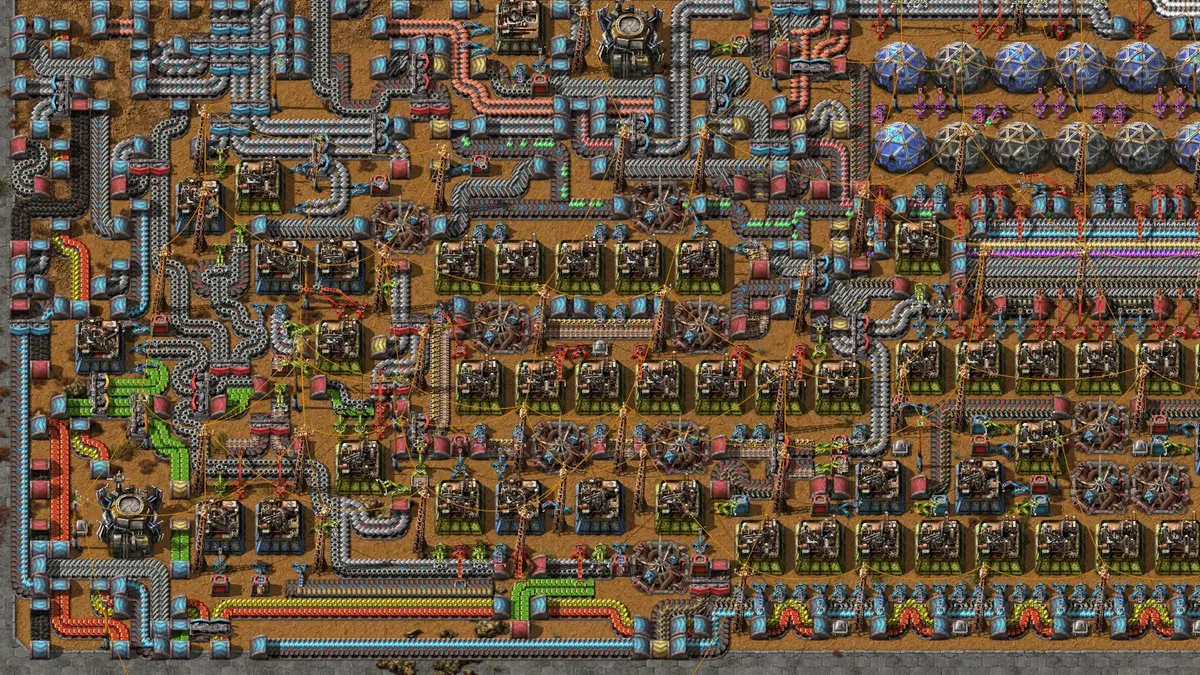
Factorio now runs natively on ARM64 Linux, and Valve has handed Wube Software's factory builder the Steam Frame Certified badge - making it one of a very small number of games to ship a native ARM64 Linux build instead of leaning on a translation layer.
The detail comes from Friday Facts #446, the studio's long-running development blog. Valve sent two Steam Frame development kits, one to the Wube office in Prague and one to the home of programmer raiguard in the United States, and Factorio first booted on the headset in February 2026.
The port was more plumbing than gameplay
Most of the work had nothing to do with the game. Wube builds with Clang, so the team had to pass the right target triple to the compiler and linker, point them at an ARM64 sysroot and use a linker that handles cross-compilation - the Mold linker they already used does. The sysroot comes from debootstrap, which unpacks ARM64 Debian system files into a directory. The awkward dependency was OpenSSL, which Wube uses only on Linux and which resists tidy build systems.
Steam's own plumbing needed attention too. Valve's Steam Linux Runtime gives games a stable base of libraries to target, but the ARM64 build only arrived with steamrt 4.0 - steamrt 1.0 never got one - so Wube moved Factorio to steamrt 4.0 for every player, and reports no trouble as a result. The Steamworks SDK update shipped in version 2.1.15 and needed a single hotfix, which the studio calls the worst of it.
Valve has prioritised Windows games running through Proton and FEX, and Android games running through Lepton, so the infrastructure for native ARM64 Linux games is still loosely defined. Wube's workaround ships both binaries to everyone and uses a shell script to launch whichever one matches the machine. Players on the Linux experimental branch already have it.
How it actually runs
On the Steam Frame, Factorio uses the same graphics settings as on the Steam Deck and renders at 720p, holding 60 frames per second in most situations with dips in busy scenes. Lowering the settings did not help, which Wube reads as a more fundamental limit in how the game's OpenGL renderer talks to the Frame's software stack. On the processor side, the native ARM64 build is about 11% faster than the x86 build running through FEX translation, measured on a 10,000 science-per-minute megabase.
The headset is not the only ARM machine in the story. On a Raspberry Pi 5, the native build is roughly 28% faster than x86 running through box64, although the Pi's limited OpenGL support means it is a server host rather than a place to play. On Asahi Linux running on a MacBook Pro with an M1 Pro, the native build benchmarked about 35% faster than x86 through FEX. Wube has not tested that setup for itself and warns that it is play at your own risk.
Little changes in the hand. Factorio plays much as it does on the Steam Deck or the Nintendo Switch, but it still responds to mouse movement and clicks while in gamepad mode, which pairs neatly with the Frame's laser pointer for clicking through menus quickly. A Steam Controller, or a mouse and keyboard, work exactly as before.
Our opinion
A studio with a fraction of Valve's resources has now done the platform work Valve's own storefront is still sketching out, and it did it for hardware most developers will not touch for years. Steam Frame certification is the useful part: it turns ARM64 Linux from a curiosity into a portability target with a badge attached, which is how platforms get taken seriously. The Raspberry Pi result is the quietly interesting one, because 28% is a serious number for anyone who has ever wanted to run a server on a machine the size of a deck of cards. Eleven years after players first asked for it, Factorio has become one of PC gaming's better-behaved ports - and it did so without a translation layer doing the heavy lifting.