Krafton ends development of PUBG: Black Budget before release
PUBG Studios has stopped work on its extraction-shooter spin-off after deciding the project's direction could not support a long-term game.
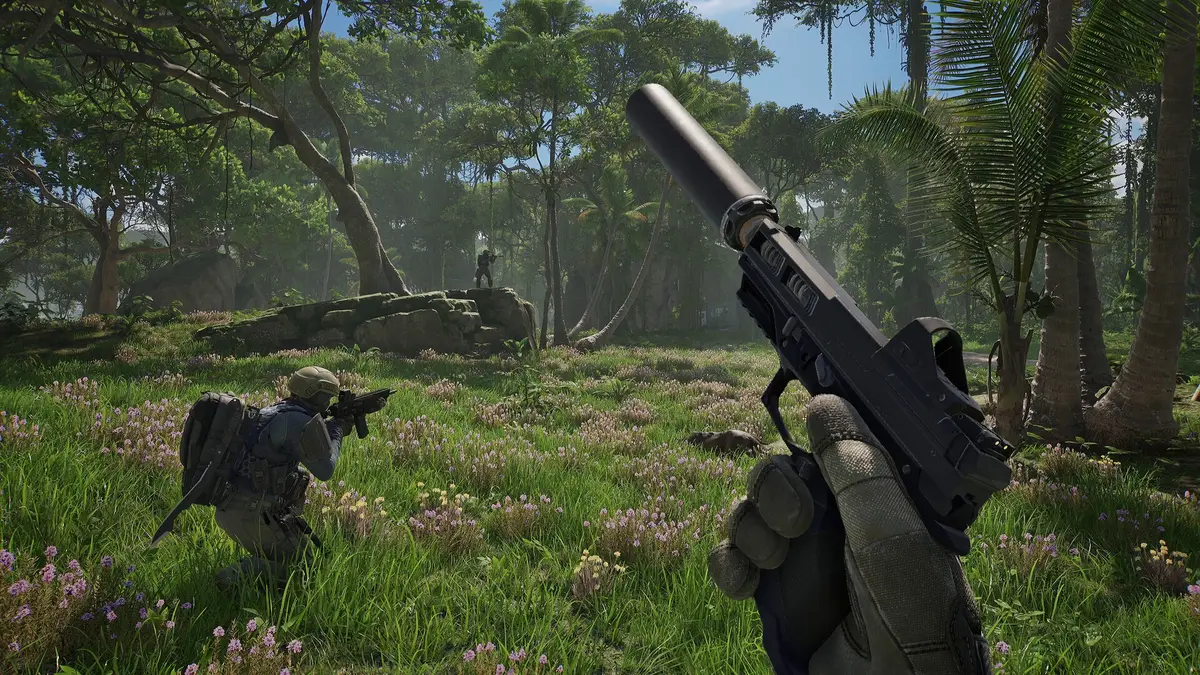
PUBG Studios has stopped development of PUBG: Black Budget, the extraction-shooter spin-off it announced in 2025. The studio confirmed the decision in an announcement on the game's Steam page dated 1 October 2026, before the project ever reached a release date.
“After reviewing the project's development status and future direction, we concluded that its current direction would not allow us to deliver an experience players could enjoy over the long term,” the studio wrote. “We have therefore made the difficult decision to end development of PUBG: Black Budget.”
What Black Budget was meant to be
The project was an attempt to push PUBG away from battle royale. Its Steam page describes an FPP-first tactical extraction shooter set on an island trapped in a time loop by a supernatural phenomenon called the Anomaly, where Contractors raid an abandoned research facility, keep whatever they extract and lose whatever they carry in. Sessions were designed to run up to 30 minutes, with squads of up to three and 45 players per match, facing other players and hostile entities across a shrinking playable area.
Closed alphas, then a stop
PUBG Studios ran closed alpha tests during the project's development and thanked the players who took part and shared feedback. The studio said it will carry what it learned from that work into future projects and keep listening to players as it explores new gameplay experiences. The Steam store page remains online with its release date still listed as to be announced, so the game never shipped in any form.
Black Budget was developed by PUBG Corporation and published by KRAFTON, the parent company behind PUBG: Battlegrounds.
Our opinion
Extraction shooters are the hardest genre to launch into right now. They need a large, committed and unusually patient player base, and the graveyard is already well stocked with games that discovered that after release rather than before it. Stopping a year in, once closed alphas had shown the shape of the thing, is an expensive admission, but it is cheaper than shipping a live-service game that nobody signs up for. The interesting part is the salvage. The time-loop island premise was genuinely strange in a good way, and if that idea resurfaces in a tighter, cheaper game, Black Budget will read as a rehearsal rather than a failure.