FunnyPlaying's $69 FPGB Mini plays real Game Boy carts
The FPGB Mini is an FPGA handheld that takes original Game Boy and Game Boy Color cartridges, and FunnyPlaying's first run has already cleared.
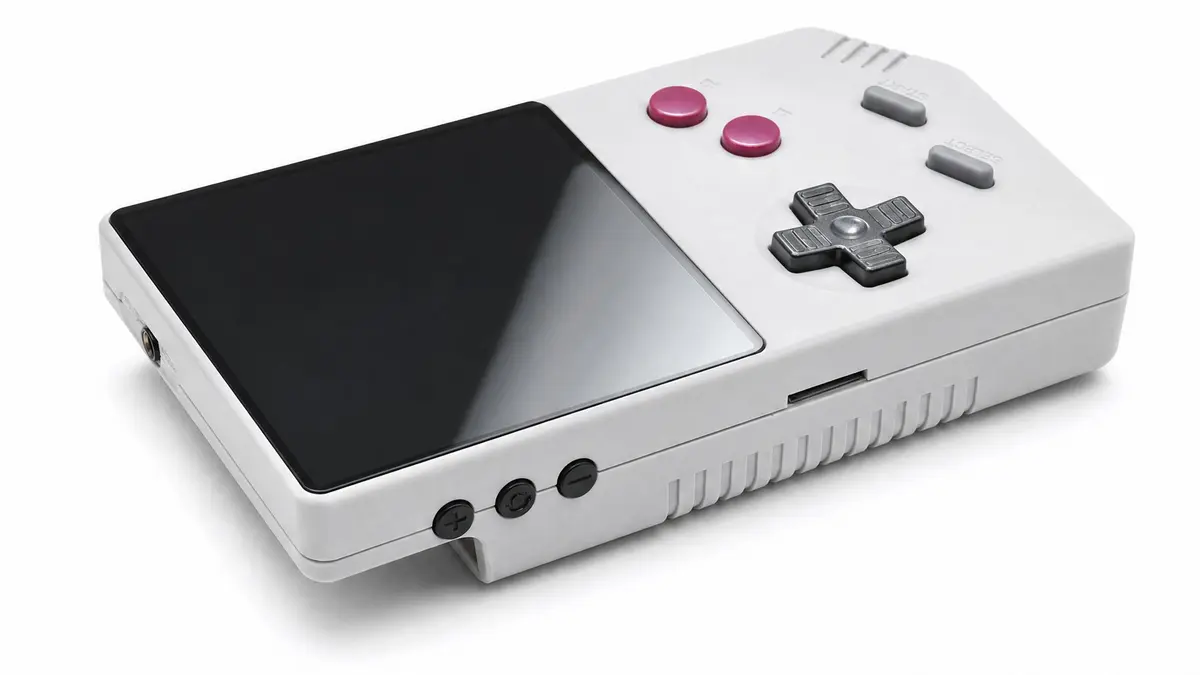
FunnyPlaying's pocket-sized answer to the retro-handheld boom is finally on sale, and the first batch did not last. The FPGB Mini is a $69 handheld built around a field-programmable gate array rather than a software emulator, so it plays genuine Game Boy and Game Boy Color cartridges at hardware speed. Order one now and the storefront does not quote a shipping date at all: the only model on sale carries a 20-day wait while the next production run is built.
That queue is the interesting part. The listing went live on 18 September, and the grey console sold through quickly enough that FunnyPlaying is now selling the restock rather than the stock. It is a familiar pattern for small retro-hardware makers, and a useful signal that appetite for cartridge-authentic handhelds has not cooled.
What the FPGB Mini actually is
It is a single-purpose machine. FunnyPlaying describes it as an FPGA handheld built for one job: playing original Game Boy and Game Boy Color cartridges with hardware-level accuracy. There are no emulation cores to configure, no ROM library to organise and no menu to negotiate before a game starts. You push a cartridge into the 32-pin slot and play.
The company says that slot handles Japanese releases and cartridges built around special chips, which is the part emulation has always struggled with. It also states plainly that the FPGB Mini is an independent product with no affiliation to or endorsement from Nintendo, a disclaimer doing real work on a device that deliberately echoes the shape of the hardware it replaces.
The hardware inside that shell
The screen is a 2.98-inch IPS panel at 800x720 with 16.7 million colours, which is far more resolution than the original hardware ever produced and enough to keep pixel art square when it is scaled up. The shell around it measures 113 x 64 x 22mm and weighs about 135g with the battery fitted, close to the proportions of a Game Boy Color and light enough to disappear into a jacket pocket.
Power comes from a 1,800mAh rechargeable lithium cell rated for four to six hours of play and charged over USB-C at 5V/1A in roughly two and a half hours. A CR2032 coin cell backs a real-time clock with a two-year standby rating. There is a microSD slot that takes cards up to 32GB for save backups, screenshots and firmware updates, link play through a USB-C to DB9 adapter, and a 0.5W speaker. Controls are a D-pad, A, B, X and Y buttons, Start, Select, volume and power, and the box includes a hard protective shell case alongside the console.
Who should care
The FPGB Mini is not trying to be a general-purpose retro handheld, and it should not be judged as one. It plays two cartridge formats, both of them from Nintendo's 8-bit line, and that is the entire brief. If your collection is a shoebox of Game Boy cartridges and you want to play them with the original timing quirks intact, $69 is a small fraction of what the established FPGA handhelds ask. If you want Game Boy Advance, Super Nintendo or a digital library on one device, FunnyPlaying is not pretending to sell you that.
Our opinion
The FPGB Mini is what happens when a parts company decides to build the whole machine, and the result reads like a spec sheet written by people who have spent years staring at the inside of a Game Boy. Nailing one format instead of spreading thin across six is the right call: every compromise in cheap retro hardware comes from trying to be everything, and this console refuses the temptation. It also puts the price in the right place. FPGA accuracy has spent a decade as a premium hobby, and the steep entry fee is the only reason cartridge collections sit in drawers instead of in hands.
Two things stop it being an easy recommendation. The 20-day wait is a tell about production scale, not demand alone, and anyone who has ordered from a small manufacturer knows what a shifting date does to patience. And the CR2032 clock is the one line that invites a question rather than a nod: on the original hardware, the handful of games that cared about time kept it in a chip inside the cartridge, so a console-side clock is either quietly fixing a known quirk of the core or solving a problem nobody had. Either answer is fine. FunnyPlaying just has not told us which one it is, and for a handheld whose entire pitch is accuracy, that is the detail worth publishing next.