Ace Combat 8 puts its pilot inside the story
Project Aces explains how first-person scenes, radio chatter and squadron choices shape Ace Combat 8: Wings of Theve.
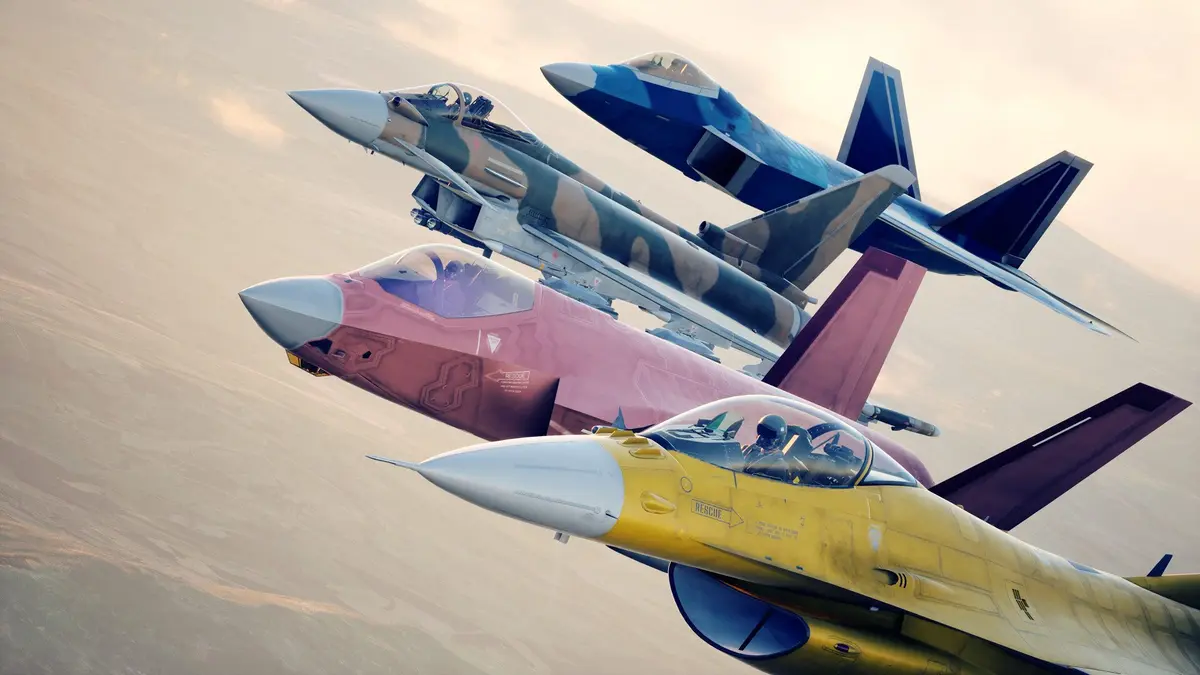
Ace Combat 8: Wings of Theve is putting its pilot closer to the people caught in its war. Project Aces has explained how first-person cutscenes, radio chatter and small choices are being used to make the upcoming fighter game feel more personal than its predecessors.
A pilot who inherits a legend
The story begins with the player character found floating in a life raft after a battle. Once aboard the Endurance, one of the Federation of Central Usea’s remaining aircraft carriers, the pilot is sent up as navigator for Jan ‘Rex’ Cope — a fighter pilot used as a propaganda symbol rather than a frontline ace.
Cope carries the Wings of Theve call sign, named after the Federation’s capital, but his orders are to flee from every fight. After Cope is killed when the pair are shot down, the player inherits the call sign and quietly takes his place. That makes the player a central figure in the war effort while also giving the story a deliberately uncomfortable relationship with celebrity and propaganda.
First-person scenes and small decisions
PlayStation Blog says most of the game’s story scenes are presented from a first-person perspective. Instead of watching characters from a distant camera, players will experience conversations in rooms and on the carrier deck, alongside interactions that let them look around and respond to prompts. DualSense haptics are also intended to make those moments feel more immediate.
The pilot remains silent, but players can answer some questions with the D-pad and make small decisions during key scenes. Those choices do not rewrite the whole campaign, yet they influence how members of Joker Flight respond. In one example, squadron member Coster asks to leave formation briefly to help a group of allied pilots who also happen to be a famous rock band.
A squadron heard over the radio
The members of Joker Flight are present between missions, during briefings and over the radio while aircraft are in the air. Players can issue orders, call wingmen back into formation or ask them to cover a target. The focus on individual pilots is designed to make the Federation’s battle against the invading Sotoan forces feel like a conflict involving people rather than a string of disconnected missions.
Radio chatter is another major part of that approach. During an operation that turns into an ambush, ground forces report their situations and call for help at the same time, turning the soundscape into a reminder of the wider war. Responding to some requests can also bring characters back in later missions, reinforcing the idea that the player’s actions are noticed beyond the cockpit.
Our opinion
The first-person approach sounds like a smart fit for Ace Combat 8. The series has always understood the drama of a radio call arriving at exactly the wrong moment, but placing more of the story around the player should make those voices feel less like mission flavour and more like a squadron worth protecting. The silent protagonist remains a risk — small dialogue choices can only do so much — yet the emphasis on recurring pilots and consequences gives the campaign a stronger emotional hook than another parade of anonymous briefings.