Nvidia’s game SDKs learn to stream dense geometry
Nvidia’s RTX Kit 2026.3 adds streaming level-of-detail clusters, DirectX 12 Agility support and 600M-parameter speech models, with Gears of War: E-Day next in line.
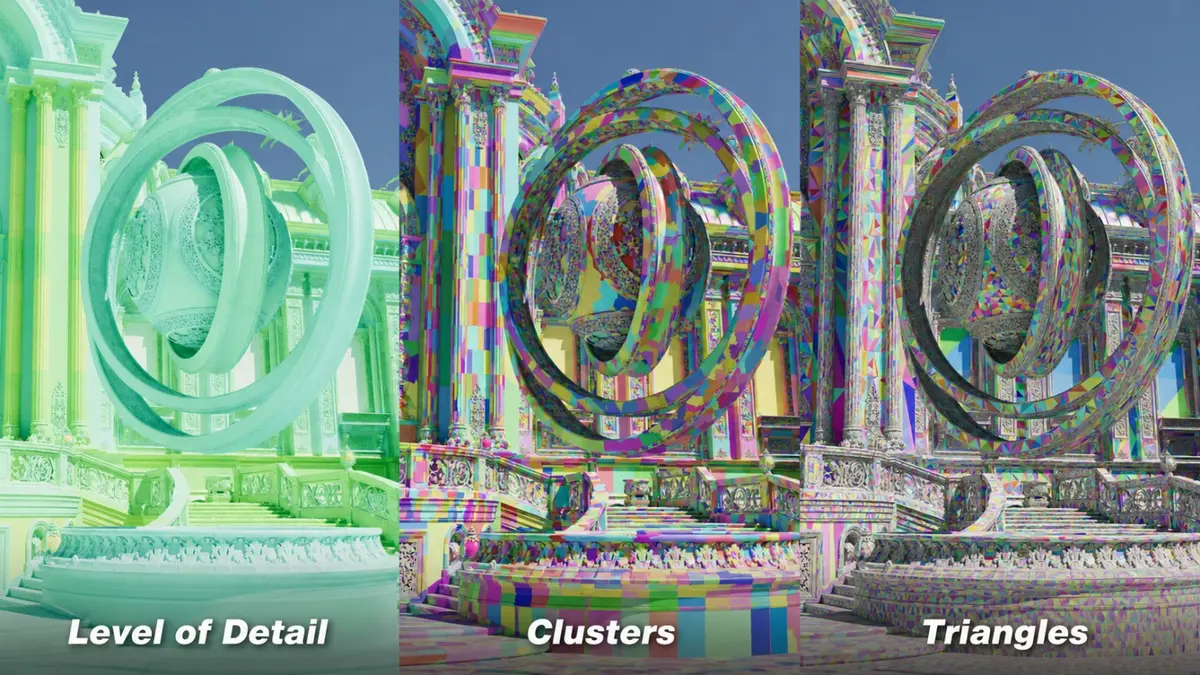
Nvidia has pushed out another round of developer releases, and the most interesting one is about what the engine can leave out. RTX Mega Geometry 2.0 is available now and adds streaming of continuous level-of-detail clusters for high-density meshes, with the RTX Kit 2026.3 bundle and new Nvidia ACE speech models shipping alongside it on 22 September.
Mega Geometry 2.0 streams the detail it does not need
Ray tracing gets expensive when every ornate balcony rail and statue in a scene is made of triangles the camera never truly needs. RTX Mega Geometry groups that geometry into clusters so a ray-traced scene can swap detail in and out as the player moves, and version 2.0 adds streaming of continuous level-of-detail clusters rather than holding the whole lot in memory. Nvidia demonstrates the scale with a newly released textured glTF version of Zorah, the ornate demo scene it has used for years.
The first consumer test is a big one. Nvidia says RTX Mega Geometry is coming soon to Gears of War: E-Day, promising higher frame rates, higher image quality and more responsive controls — and the company has published an interview with The Coalition’s Studio Technical Director Kate Rayner and Rendering Lead Mike Perzel about how the studio has integrated it with DLSS.
Five updates inside RTX Kit 2026.3
The rest of the release is a tidy-up across the RTX Kit libraries. RTX Character Rendering 1.4 improves far-field hair sampling and energy conservation; RTX Dynamic Illumination 3.1 adds DLSS Ray Reconstruction integration and improves ReSTIR path tracing; RTX Neural Shading 1.4 moves to the latest DirectX Linear Algebra preview toolchain; and RTX Texture Filtering 1.3 introduces Collaborative Texture Filtering for stochastic texture filtering, which is the sort of technology that quietly fixes shimmering in the distance.
Two of the components also pick up support for the Microsoft DirectX 12 Agility SDK preview with Linear Algebra, including RTX Neural Texture Compression 0.10 beta, which uses Tensor Cores to decompress neural textures inside DirectX shaders. That beta and the texture filtering library both add Windows on Arm support as well, which matters more now that Nvidia is building machines around the platform than it did a year ago.
ACE gets smaller, faster speech models
Nvidia ACE, the stack for characters that talk back, gains Nemotron Speech 3.5 Streaming, a 600-million-parameter speech recognition model built to transcribe player speech with as little latency as possible, and Qwen3 TTS, a text-to-speech model of the same size that supports custom fine-tuning. Both run locally through the In-Game Inferencing SDK, which adds developer-preview support for RTX Spark, Nvidia’s platform for slim laptops and efficient desktops, plus Gemma4 in its GPT plugin, a Stable Diffusion plugin with sample code and the latest llama.cpp performance work.
Our opinion
Version numbers in a middleware release sound like housekeeping, but for studios they are contracts: a shipping game pins the SDK it certified against, and a rendering library that breaks a few pixels of hair is a patch the studio pays for, not Nvidia. That is why the useful sentence in this announcement is the one about Gears of War: E-Day. Streaming level-of-detail clusters is a genuine answer to the memory problem ray tracing created, but it only matters when a game ships with it, and Nvidia’s own demo scene is a pitch rather than proof.
The more interesting long game is how routine this has become. RTX Kit now has its own release cadence, two of its components have added Windows on Arm in the same drop, and the speech models that would once have been a cloud service are 600 million parameters and expected to run on the player’s machine. Nvidia is no longer selling one graphics card feature at a time; it is shipping a platform with a schedule, and it is the studios that have to keep up with it.